MONDAY
Peachtree City
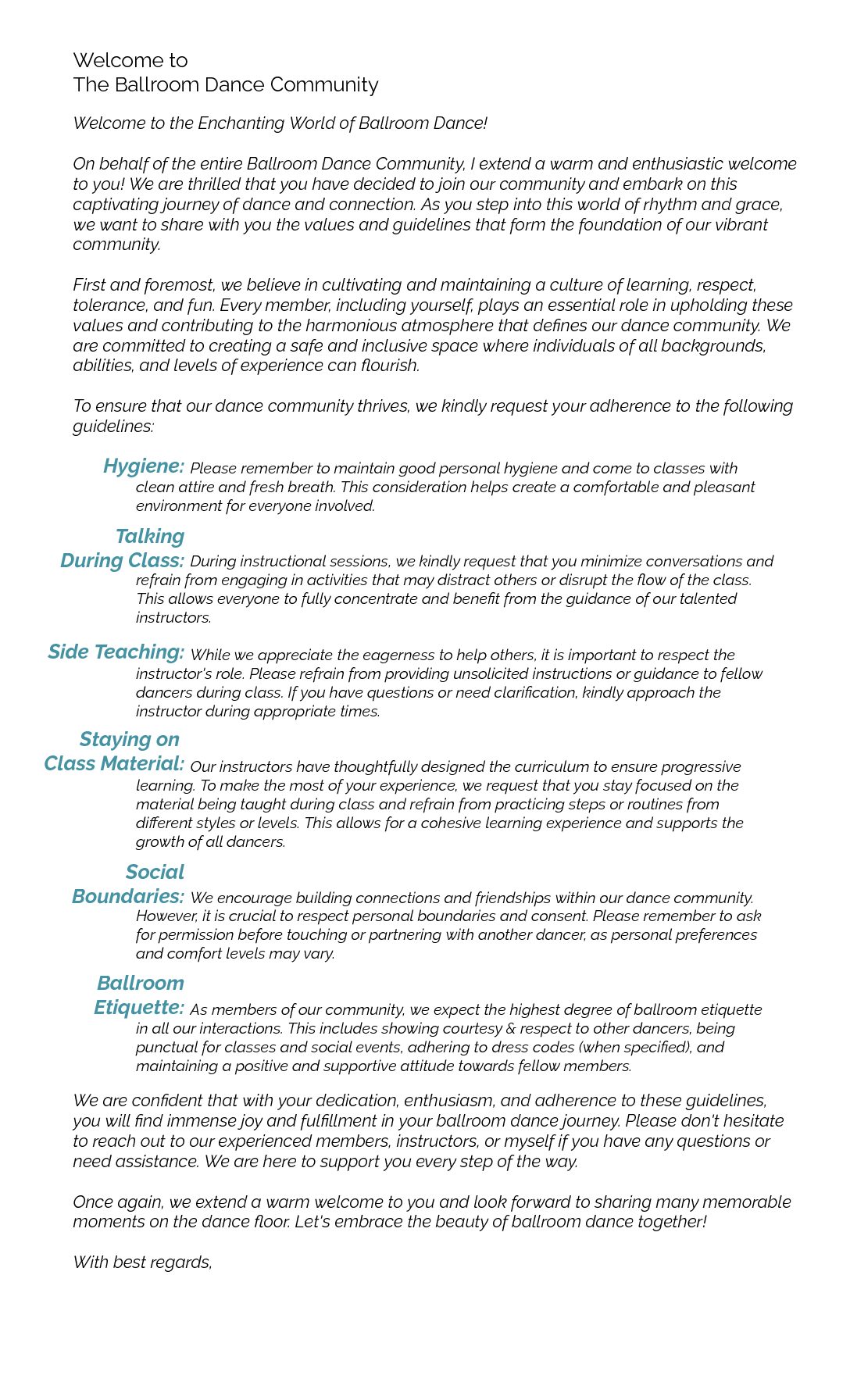
Classes with Ballroom Dance Community
Lessons times: 7pm & 8:30pm
PTC3 - Christian Church
500 Kedron Dr, Peachtree City 30269
for class details and registration:
TUESDAY
Snellville
Classes with Tucker Rec - Registration with Tucker REC
Tucker Recreation Center
4898 Lavista Rd, Tucker, GA 30084
Room: 19
6 Class Series for $60.00 (Cash/check to Robert Tolentino) includes a video review
Classes with Ballroom Dance Community
Lessons times: 7pm & 8:30pm
First Baptist Church of Decatur
308 Clairemont Ave, Decatur, GA 30030
For class details and registration:
Ballroom 1: Introduction to Partnership Dancing
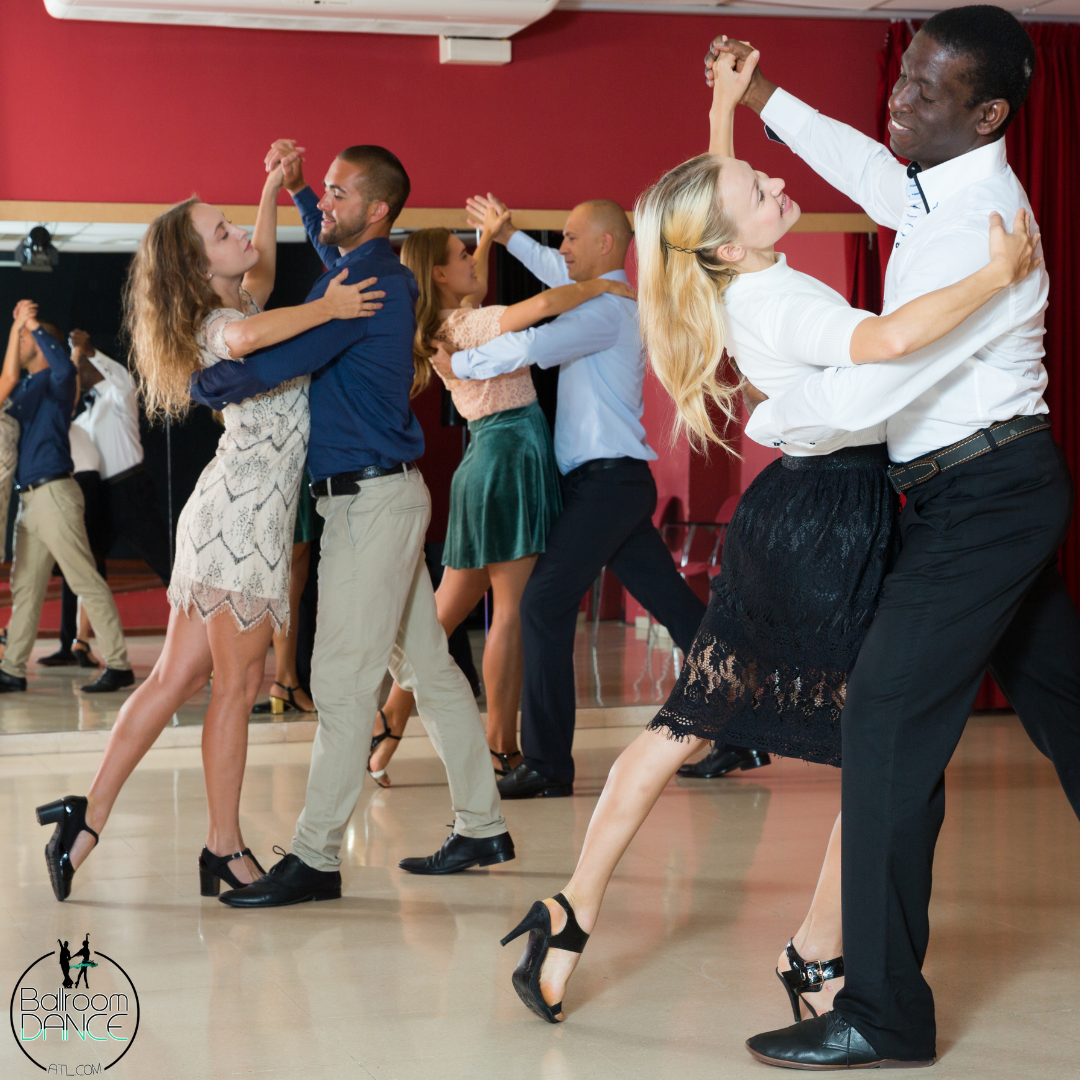
Embark on your dance journey with our Ballroom 1 series, the perfect starting point for newcomers to partnership dancing. Over a 6-week course, you will gain a comprehensive overview of partnership dynamics and the essential elements of dance. We’ll introduce you to the key steps of popular ballroom dances including the elegant Foxtrot, the graceful Waltz, the lively Swing, and the romantic Rumba. Designed for immediate enjoyment, this class focuses on getting you comfortable on the dance floor quickly, ensuring you have fun from the very first step. No partner? No problem! Come solo and discover the joy of dance in a welcoming, supportive environment.
Ballroom 2, 3, 4: Building Your Dance Foundation
Continue your dance exploration with our progressive series, Ballroom 2, 3, and 4. Each of these 6-week courses builds upon the foundation laid in Ballroom 1, designed to be taken in succession. As you advance through the series, you will deepen your understanding of the dances introduced initially, with an emphasis on reinforcing basic steps and techniques. We focus on developing your comfort and confidence on the dance floor, enhancing your ability to lead or follow, and introducing you to new pattern variations that add flair to your dancing repertoire. These classes are ideal for solidifying your skills and preparing you for more advanced dance challenges, all while ensuring you continue to enjoy every moment of your dance journey.
Single Dance Group Class Series
Dive deep into the world of dance with our Single Dance Group Class Series. Over the course of 6 to 8 weeks, this series offers an immersive experience into one specific dance style, allowing you to not only refine your basics but also enhance your technique, styling, and expression.
What You Will Learn:
- Technique & Styling: Elevate your dance with advanced techniques and personalized styling tips that bring out the best in your movements.
- Characterization: Learn how to embody the true spirit and character of the dance, adding depth and authenticity to your performance.
- New Patterns & Variations: Keep your routines fresh and exciting with innovative patterns and variations that challenge and inspire.
- Music Appreciation: Develop a deeper understanding and appreciation of the music that defines the dance, enhancing your ability to interpret and move to the rhythm.
Dance Styles: Waltz, Tango, Foxtrot, Cha cha, Rumba, East Coast Swing, West Coast Swing, Hustle, Salsa, Bachata, Two Step, Night Club Two, Bolero
Key Features:
- Review Video: After each class, a review video will be created and shared with you to help you visualize your progress, review techniques, and refine your movements at your own pace.
- No Partner Necessary: Don’t have a dance partner? No worries! Our classes are designed to accommodate individuals, ensuring everyone gets the full benefit of the learning experience.
Whether you're a seasoned dancer looking to polish your skills or a newcomer eager to step into the dance world, our Single Dance Group Class Series is tailored to help you achieve your dancing aspirations. Embrace this chance to explore your chosen dance more profoundly than ever before and let the music and movement transform your understanding and execution of dance.
Join us and let your dance journey unfold with passion, precision, and flair. Every step is an opportunity for growth and expression.
questions or update request: email: robbtolentino@yahoo.com
or call: 678.789.8197
Private Lessons available: 678.789.8197
Argentine Tango
Argentine Tango is characterized by its dramatic, passionate style and close embrace. Unlike its ballroom cousin, this dance allows for a greater improvisational freedom, leading to a more intimate connection between partners. Originally developed in the late 19th century in Buenos Aires, Argentine Tango is as much about the music and mood as the movements themselves.
Bachata
Bachata originated in the rural neighborhoods of the Dominican Republic in the early 20th century, known for its romantic melodies and sensual movements. The dance is distinguished by its close hold and the soft hip movements, which are driven by the beat of the bachata guitar. It's a dance that emphasizes closeness and expresses the beauty of connection.
Bolero
Originally a Spanish dance, Bolero was adapted in Cuba with a slower tempo suitable for a dance of romance and sentiment. The music features a constant beat, which provides a foundation for its smooth, sweeping steps and dramatic arm movements. This dance is unique in its blend of flowing motions and controlled pauses.
Cha Cha
The Cha Cha originated from Cuba in the 1950s and is known for its lively rhythm and playful movements. The dance started as a variation of the Mambo, distinguished by its compact steps and syncopated motion, often including a quick triple step. Cha Cha's vibrant energy makes it a favorite among dancers who enjoy its cheeky style.
East Coast Swing
An energetic style of swing developed in the 1940s in the United States, East Coast Swing evolved from the Lindy Hop, a dance that was born out of Harlem’s vibrant ballroom scene. It is characterized by its upbeat music and a basic structure of six counts, making it one of the most versatile and adaptable swing dances.
Foxtrot
The Foxtrot was first danced in 1914 and quickly became a standard of the American ballroom. This dance is known for its smooth and elegant style, where dancers flow across the dance floor in long, continuous movements. Interestingly, it was initially performed to the same ragtime music as the early Tango.
Hustle
Born in the 1970s disco era, the Hustle involves fast-paced and energetic moves, reflecting the vibrant nightlife of the time. While it began in New York City's Latino communities, it gained mainstream popularity with the disco craze. The dance emphasizes coordination and rhythm, perfect for energetic music.
Mambo
Mambo captivated the American dance scene after its introduction in the 1940s. Originating from Cuba, Mambo is characterized by its energetic and rhythmic pattern that uses a 4/4 beat. The dance is known for its expressive movements and was a precursor to the Cha Cha and Salsa.
Merengue
Originating from the Dominican Republic, Merengue is celebrated for its simplicity and energetic tempo. It is said that this dance was developed by slaves who were chained together and, therefore, forced to drag one leg as they cut sugar to the beat of drums. This dance allows continuous partner rotation and spirited limb movements.
Night Club Two Step
Often danced to ballads and slower music tempos, Night Club Two Step is a relatively modern dance, developed in the mid-1960s by Buddy Schwimmer to fill the gap where slower songs didn't fit traditional fast-paced dances. It is characterized by its smooth and sweeping movements, providing dancers a graceful way to interpret slower music.
Quickstep
Emerging in the 1920s, the Quickstep is a combination of fast steps and syncopated rhythm, making it lively and fun. It evolved from the Foxtrot and the Charleston, and it is danced to fast-paced music, often requiring a good deal of stamina and precision, which adds to its exhilarating nature.
Rumba
Often referred to as the “dance of love,” Rumba originated in Cuba and is danced to music with slow rhythms and sensual movements. The dance focuses on hip movements driven by the subtle movements of the dancer’s legs and feet, portraying a story of desire and courtship.
Salsa
Salsa is a vibrant and popular dance in the Latin American community that emphasizes vibrant energy, spontaneous movements, and an engaging rhythm. It originated in the 1960s and 1970s in New York City, blending Cuban and Puerto Rican dance influences. It is known for its inviting and communal atmosphere, where style and flair take center stage.
Samba
Samba, with its origins in Brazil, is a dance rich in rhythm, joy, and energy. It is recognized by its rapid steps and rhythmic bouncing motion, which uses the whole body. Samba reflects the carnival atmosphere, bringing festive spirit to the dance floor with each beat.
Tango
Tango is a dance that originated in the late 19th century in the working-class neighborhoods of Buenos Aires and has since become a global phenomenon. Known for its passionate and precise movements, Tango involves a variety of stances and is heavily reliant on improvisation and the emotional state of the dancers.
Two Step
Two Step is a classic American dance that is straightforward yet rhythmic. It typically involves a leader and a follower gliding smoothly across the dance floor, traditionally to country music. Its simple, traveling patterns make it accessible to beginners yet enjoyable for all levels of dancers.
Viennese Waltz
The Viennese Waltz harks back to the early 19th century, known for its rapid tempo that twice exceeds that of the standard waltz. It requires stamina and control, as dancers whirl around the dance floor, making it a breathtaking spectacle of speed and fluidity.
West Coast Swing
A smoother variant of the swing family, West Coast Swing originated from the Lindy Hop and is characterized by a distinctive elastic look that results from its basic extension-compression technique of partner connection. It is danced largely in a slot, allowing dancers to improvise within the framework of the dance's structure.
Each of these dances offers unique challenges and joys, and they can be a wonderful way to enhance physical health, emotional well-being, and social connections.